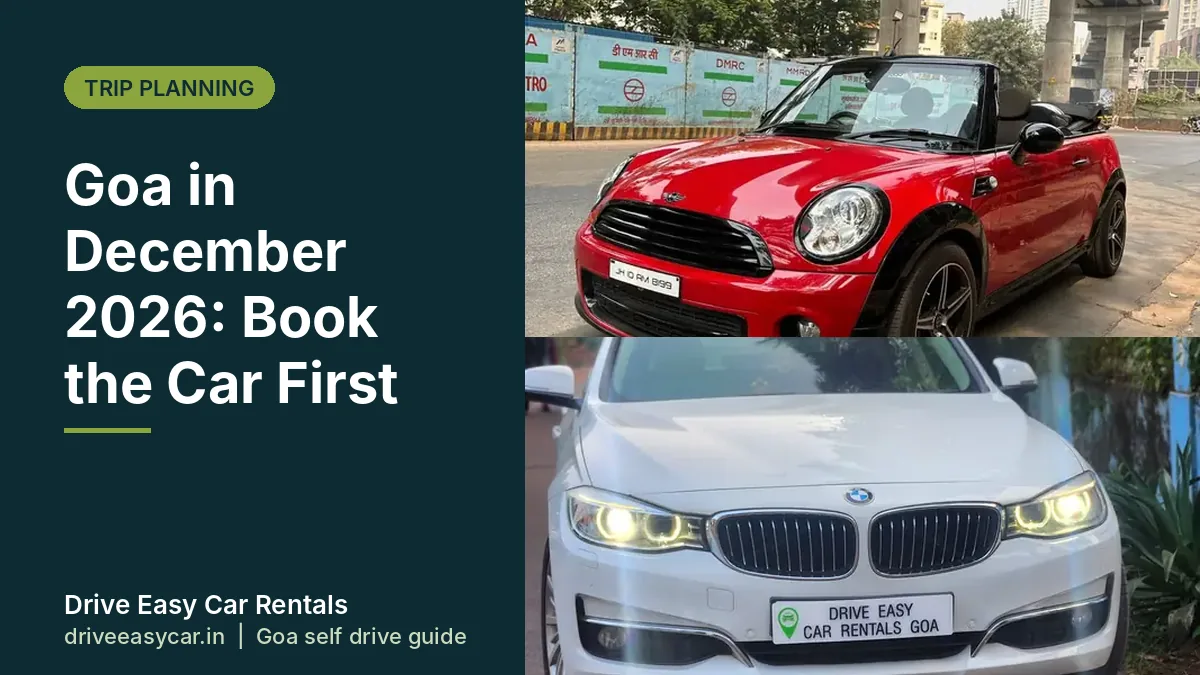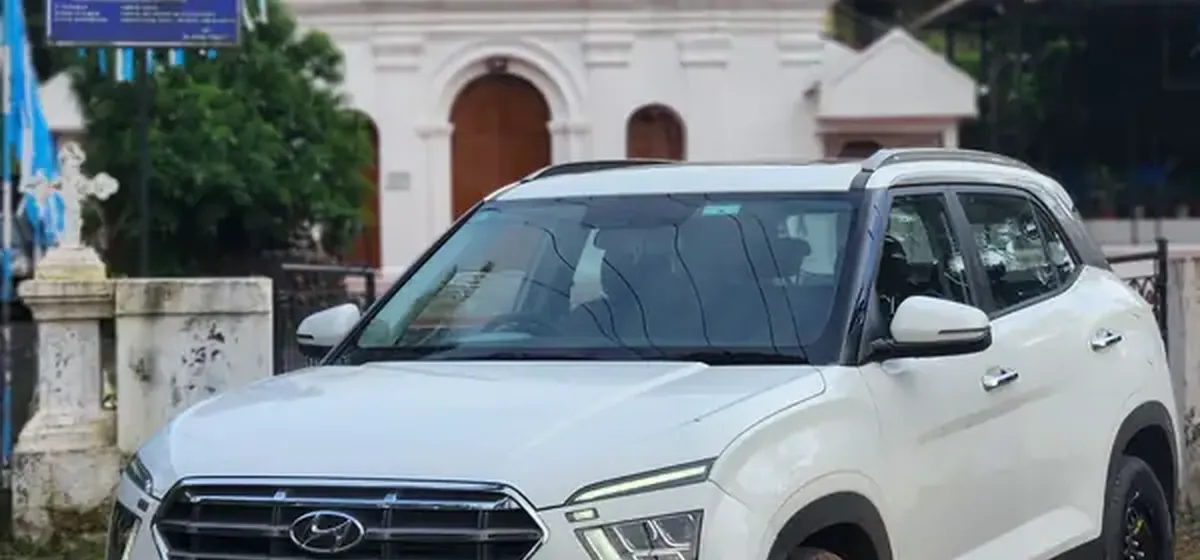
Yes, you can take a self drive rental car on a Goa ferry. The state's River Navigation Department runs ferries on seventeen routes, and cars are carried on nearly all of them. The busiest crossing for visitors, Ribandar to Chorao, now has two ro-ro ferries that load cars straight off the ramp. Here is how the crossings work, which ones are worth doing with a car, and the two small rules that catch people out.
Quick answer
Drive to the ramp, join the queue of cars, pay the small car toll on board and roll off on the other side a few minutes later. Foot passengers and two-wheelers cross free. The Ribandar to Chorao ferry runs from 6 am until well past midnight, as of October 2026. Our cars can go on any Goa ferry; they just cannot leave Goa.
Can I Take a Rental Car on a Ferry in Goa?
You can. The ferries are public transport run by the Goa River Navigation Department, and a car with Goa plates is exactly what they are built for. Our only rule is that the car stays inside the state, and every ferry route listed below starts and ends in Goa, so there is nothing to ask us before you go. Keep the car's documents in the glovebox as usual and treat the ferry like any other road.
Two things are worth knowing before your first crossing. Cars, jeeps and three-wheelers pay a toll on most routes; foot passengers and two-wheelers do not, according to the department's published schedule. And ferries outside the timed hours run only on special charges, so a late crossing is possible but costs more and should not be relied on.
Which Goa Ferries Carry Cars, and When Do They Run?
These are the routes a visitor with a car is most likely to use, with hours taken from the River Navigation Department's route list as of October 2026. Timings change for festivals and works, so look at the department's site on the day if you are cutting it fine.
| Route | Hours | Why you would use it |
|---|---|---|
| Ribandar to Chorao | 6 am to about 2 am | Chorao island and the Salim Ali bird sanctuary; two ro-ro ferries plus conventional boats |
| Old Goa to Piedade (Divar) | 6 am to about 2 am | Divar island from the Old Goa churches side |
| St Pedro to Divar | 6:30 am to about 12:45 am | Divar island from the Ribandar side |
| Pomburpa to Chorao | 6 am to about midnight | Chorao from the Bardez side, handy from Porvorim and Aldona |
| Panaji to Betim | 6 am to 10 pm | A short hop across the Mandovi; useful when the bridge traffic is bad |
| Kerim to Tiracol | 6 am to 10:15 pm | Tiracol fort at the northern tip, from Arambol and Kerim |
| Madkaim to Cortalim | 6 am to 9:10 pm | A back way between Ponda and the Dabolim side |
The Ribandar to Chorao crossing is the one that has changed most. Two ro-ro ferries, Gangotri and Dwarka, were launched on it in July 2025, each carrying around fifteen to sixteen vehicles, roughly four times a conventional boat, and the crossing takes five to seven minutes, The Goan reported at the time. Demand rose so much after the ro-ros arrived that the department added frequency in April 2026, with three services running until midnight, according to The Goan. O Heraldo also reported that the older ferryboats were brought back alongside the ro-ros at peak hours after Chorao villagers asked for them, so you may find yourself on either type.
How Does Boarding Work With a Car?
Drive to the ramp and stop behind the last car. A crew member waves cars on one at a time, and you park where you are pointed, usually nose to tail with little room on either side. Fold the mirrors in, keep the car in gear with the handbrake on, and stay in the car if the crew ask you to, which is usual on the short crossings. The toll is collected on board. On the other side, wait for the ramp to drop and the cars ahead to move, then drive straight off. The whole thing is simpler than it sounds; the queue is the only slow part.
A few practical notes from our handovers. Do not board with the air conditioning running and the engine off. On the conventional boats, two-wheelers board around the cars, so leave a little room when you stop. If you are nervous about a tight ramp, the ro-ro ferries at Ribandar are the gentlest introduction, with a wide flat deck and a proper ramp at each end.
Which Crossing Is Worth Doing for the Day Out?
Chorao and Divar are the islands most people cross for: quiet lanes, old houses, the bird sanctuary on Chorao and the church on the hill at Divar. Both are small enough to see in a morning, and a car means you can be back on the mainland for lunch. The lanes are narrow and single track in places, so a hatchback is more comfortable than an SUV.
Tiracol is the long drive: all the way north through Arambol and Kerim to a short crossing and the fort hotel on the headland. It works best from a stay in Arambol, Mandrem or Morjim, and from Mopa airport it is a shorter run than most people expect.
Panaji to Betim is less of an outing and more of a shortcut. If the Mandovi bridge traffic has stopped moving on a festival evening, the ferry sometimes gets you across faster, and the view of the casino boats from the water is the bonus.
Can the Ferries Take a Bigger Car Like an Innova or a Thar?
Yes. The ferries carry jeeps, pickups and small trucks along with cars, so an Innova, a Creta or a Thar is nothing unusual. The constraint is on the island roads, not the boat. Some Chorao and Divar lanes are tight for a 7 seater, and reversing out of a dead end with a wall on each side is not how anyone wants to spend a holiday morning. If the island day is the main reason for the car, pick a hatchback or compact SUV from the fleet and keep the big car for the airport run.
What Should I Check on the Day?
- The hours on the department's site. The table above is correct as of October 2026, but services change for festivals, works and weather, and the Ribandar route in particular has been adjusted several times in the past year.
- Festival days. The Goan reported in April 2026 that extra ferries are added for the Lairai Zatra and similar events. Expect long queues on those days, with cars at the back of the priority list.
- Monsoon. Crossings are suspended when the river is rough. If you are visiting between June and September, have a plan that does not depend on the ferry.
- Fuel. There are no petrol pumps on the small islands. Fill up before you cross; the car comes back to us at the fuel level it went out.
For the rest of what to expect on the roads, our guide to driving in Goa for the first time covers the lanes, the one ways and the scooters. The ferries are the easy bit.