

Goa's best known temples are inland, not on the coast. The largest group sits around Ponda, older and quieter shrines lie in the forested east and in South Goa, and a few historic ones are tucked into the north. A car lets you link several in one day without arranging a separate ride for each stop.
This guide gives you five day loops we suggest to guests who ask us for a temple day, plus timings, dress, parking and which car suits each route.
The Five Loops at a Glance
| Loop | Main temples | Start from | Best for |
|---|---|---|---|
| 1. Ponda Temple Circuit | Mangeshi, Mahalasa Narayani, Nagesh, Mahalaxmi, Ramnath, Shantadurga | Panjim, North Goa beaches, Margao | First visits, families with elders |
| 2. Hinterland Loop | Tambdi Surla Mahadev, Ponda on the return | Ponda or Panjim | History lovers, a full day out |
| 3. North Goa Loop | Saptakoteshwar at Narve, Bhagavati at Parshem | Mapusa, Pernem, Mopa side | Guests staying in the north |
| 4. South Goa Loop | Chandreshwar Bhutnath at Paroda, Damodar at Zambaulim, Mallikarjun at Canacona | Margao, Colva, Benaulim | Guests staying in South Goa |
| 5. Zatra Season Loop | Ponda or South Goa temples on festival nights | Wherever you stay | Repeat visitors, evenings |
Why Do You Need a Car for Goa's Temples?
The temples are spread across village roads and hill slopes rather than along one main road. The Ponda temples are close to each other but a few kilometres apart, Tambdi Surla is deep in the east, and Chandreshwar Bhutnath sits on top of a hill. With your own car you set the order, wait as long as you like at each temple, and stop for lunch where it suits you. That matters most when you travel with elders or children who need breaks.
Loop 1: The Ponda Temple Circuit
This is the loop most people mean when they say "Goa temples". The main temples are close enough that you spend more time inside them than in the car.
Suggested order
- Shri Mangeshi Temple, Priol. Dedicated to Shiva as Shri Mangesh. Look for the white lamp tower (deepstambha) in the courtyard and the temple tank. Go first thing, when it is calmest.
- Shri Mahalasa Narayani Temple, Mardol. A short drive from Mangeshi, dedicated to Vishnu in the form of Mohini.
- Shri Nagesh Temple, Bandora. A Shiva temple with a large tank in front. Quieter than Mangeshi.
- Shri Mahalaxmi Temple, Bandora. Close to Nagesh, so you can pair the two.
- Shri Ramnath Temple, Ramnathi. Stop here before lunch.
- Shri Shantadurga Temple, Kavlem. The largest complex on the circuit, with a lamp tower, tank and a striking mix of temple and Indo-Portuguese styles. Save it for the afternoon.
Getting there. From North Goa, the drive takes you through Panjim and past Old Goa towards Ponda, so you can add the Old Goa churches on a separate day. From South Goa, come up through Margao. Either way, set out by 7:30 am to reach Mangeshi before the day warms up.
Lunch. Ponda town has simple restaurants serving Goan Hindu thalis. Eat between Ramnath and Shantadurga so you are not driving hungry in the afternoon heat.
Parking. Most of these temples have an open parking area near the entrance. On weekends and festival days it fills with local families, and cars end up along the approach road. Arriving early avoids most of that.
Time needed. A relaxed full day for all six. With elders, choose three or four and spend longer at each.
Loop 2: Tambdi Surla and the Hinterland
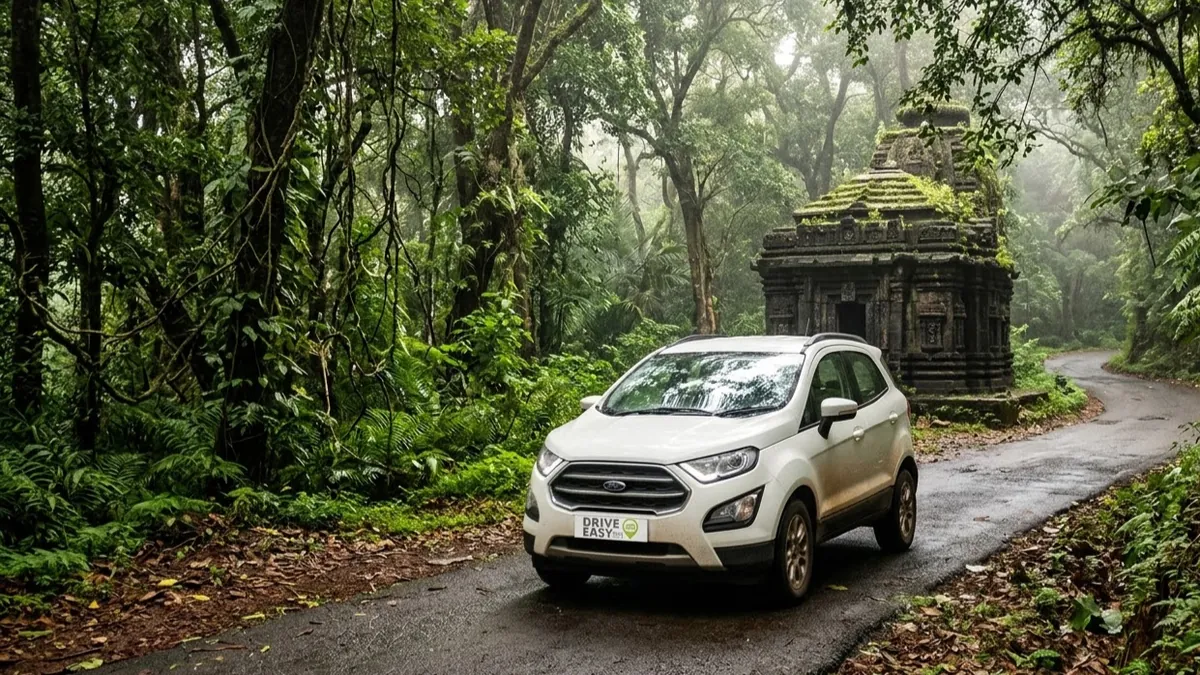
Shri Mahadev Temple, Tambdi Surla is a small 12th century temple from the Kadamba period, built in grey-black basalt and set in forest near the Bhagwan Mahavir Wildlife Sanctuary, in the Mollem area of eastern Goa. It is one of the very few temples of that age to survive in Goa, and the forest setting makes it feel far removed from the coast.
How to plan it
- Treat Tambdi Surla as the main stop of the day, not a detour. The last stretch is narrow and winds through forest, so the drive is slow.
- Fill fuel in Ponda before heading east, carry water and snacks, and download offline maps before you leave town. Do not count on finding food near the temple.
- Visit in daylight and aim to be back on the main road before dark.
- On the return, stop at one or two Ponda temples you missed in Loop 1, or at a spice plantation if your group wants a break from temples.
Best season. October to February. In the monsoon the forest is at its greenest, but the roads are wetter and slower. If you go in the rains, drive gently on the forest stretch and leave earlier.
Can you combine it with Dudhsagar? The Mollem area is also where the Dudhsagar jeep trips start, but jeep access and timings change by season. If you want both in one day, check the current Dudhsagar arrangements first and accept a very long day.
Loop 3: North Goa and Bicholim
Shri Saptakoteshwar Temple, Narve. This Shiva temple in Bicholim taluka has a turbulent history. The shrine was originally on Divar island and was moved across the river during the Portuguese period, and the present temple at Narve was renovated under Chhatrapati Shivaji Maharaj in 1668. It is small and solid, with a lamp tower and a village setting, and it draws large crowds on Mahashivratri.
Shri Bhagavati Temple, Parshem. Further north in Pernem taluka, this is the second anchor of the loop and keeps the whole day in North Goa.
Who this loop suits. Guests who landed at Mopa, or who are staying around Mandrem, Morjim, Ashwem or Arambol. You stay in the north instead of crossing Panjim twice. Pair it with a late lunch in Mapusa or a sunset on a northern beach.
Loop 4: The South Goa Temples
Start: Shri Chandreshwar Bhutnath, Paroda. This temple sits on top of Chandranath hill in Quepem taluka, around 14 km from Margao. A narrow, winding road takes you up the hill, and the last part is a climb up stone steps to the temple, which has wide views across the South Goa countryside. A smaller shrine to Bhutnath stands beside it.
Practical notes for Paroda:
- The steps are manageable for most adults, but allow extra time for elders.
- Keep food packed away. Monkeys are common on the hill.
- In the monsoon, the hill is green but the steps can be slippery.
Next: Shri Damodar Temple, Zambaulim. On the bank of the Kushavati river. Calm on most days and well known for its Shigmo celebrations.
Then: Shri Mallikarjun Temple, Shristhal, Canacona. In the far south, close to Palolem.
End the day. Palolem is close to the last stop, so you can finish on the beach. If you started from Margao, keep in mind Palolem is roughly 40 km south, so the drive back in the dark is long. Plan for it or stay the night in Canacona.
Loop 5: The Zatra Season Loop
Zatra is the Konkani word for a temple's annual festival. Through the cooler months, many Goan temples hold their zatras: deities carried in palanquins and chariots, lamp towers lit up, music, and fair stalls along the approach roads. They are some of the best evenings you can spend in Goa.
How to plan a zatra evening:
- Check dates locally. Each temple sets its zatra by the Hindu calendar, so dates move every year. Ask the temple office, your hotel or a local contact a week ahead.
- Arrive before dark. Village roads fill quickly in the evening.
- Park at the edge of the village and walk in. Do not try to drive up to the temple gate. Roads near the temple are often closed or lined with stalls.
- Expect a slow exit. Everyone leaves at once after the procession. Keep the drive back short, or stay nearby.
- Be respectful. These are religious festivals first. Ask before photographing people or rituals.
When Is the Best Time to Visit Goa's Temples?
Go early in the morning between October and February. The air is cooler, parking is easy and the temples are calm. Many temples pause darshan for some time in the afternoon, so check timings at the gate or locally before planning a late visit. Weekdays are quieter than weekends.
| Season | What to expect |
|---|---|
| October to February | Best weather, zatra season, busiest with visitors on weekends |
| March to May | Hot by mid-morning; go very early and keep the loop short |
| June to September | Green and quiet, slower and wetter roads, avoid the forest stretch after dark |
What Should You Wear and Know Before Going In?
- Dress modestly. Mangeshi and several nearby temples follow a dress code. Cover shoulders and knees, and avoid shorts and short skirts. Keep a stole or sarong in the car.
- Footwear comes off before you enter. Easy slip-ons save time when you visit six temples in a day.
- Photography inside the sanctum is usually not allowed. Follow the signs, and ask before photographing people.
- Some inner areas may be reserved for devotees. Follow the instructions of temple staff.
- Carry small change for offerings and flowers sold near the entrance.
Rules differ from temple to temple. Our Goa temple dress code guide has what each one asks.
Parking Tips for a Temple Day
- Arrive early. Temple parking areas fill by late morning on weekends.
- On festival days, park where locals park, not in front of the gate.
- Never block lanes, house gates or the temple's own vehicle entrance.
- Keep valuables out of sight while you are inside.
- On hill temples like Paroda, use the parking area provided and walk the last part rather than squeezing further up.
Which Car Works Best for a Temple Day?
- Families with elders: a 7 Seater keeps everyone together, with room to rest between stops and space for footwear bags and water. See our Innova page for seats and luggage space.
- Couples doing the Ponda circuit: an Economy Hatchback fits easily into temple parking areas and village lanes.
- The hinterland loop: a Compact SUV is comfortable on the longer forest stretch to Tambdi Surla.
A Simple Packing List
- Stole, sarong or long cotton trousers
- Slip-on footwear
- Water bottles and a few snacks
- Small change for offerings
- Offline maps downloaded
- A cloth bag for footwear and flowers
References
- Govt neglects Narve temple, O Heraldo
- Shri Saptakoteshwara Temple, Lonely Planet
- Chandreshwar Bhootnath temple, The Goan
- Shri Chandreshwar Temple, Lonely Planet


